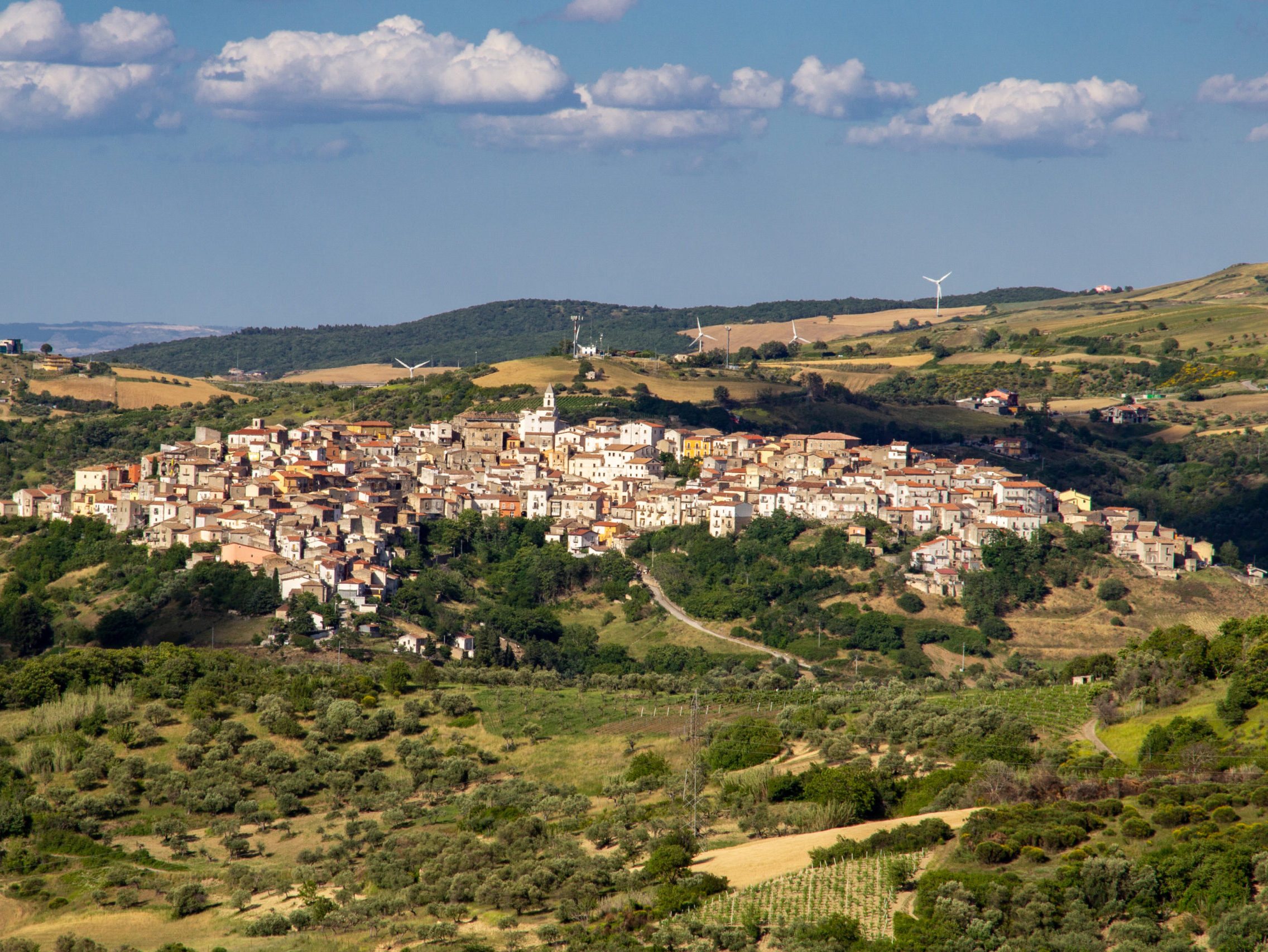
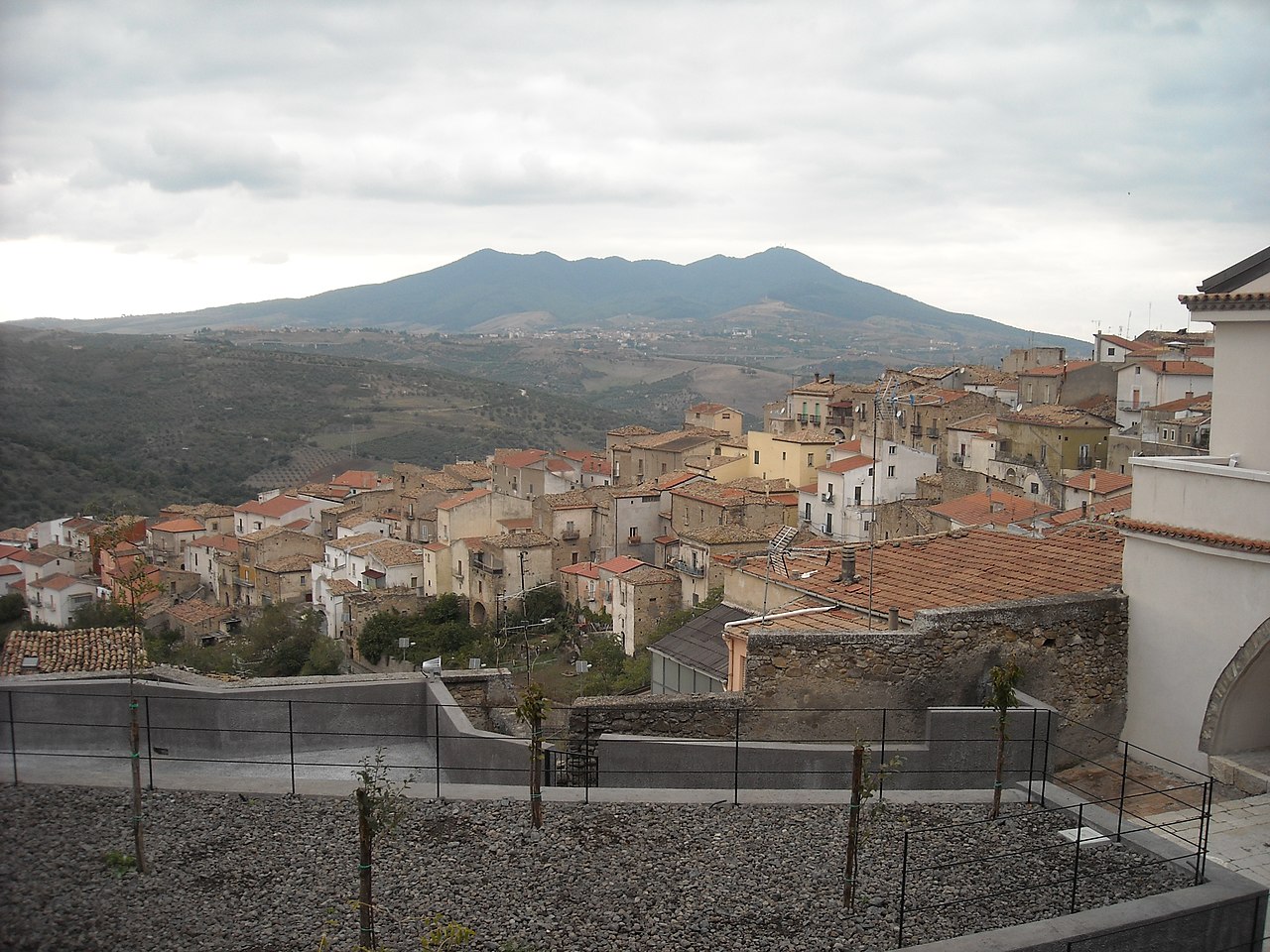
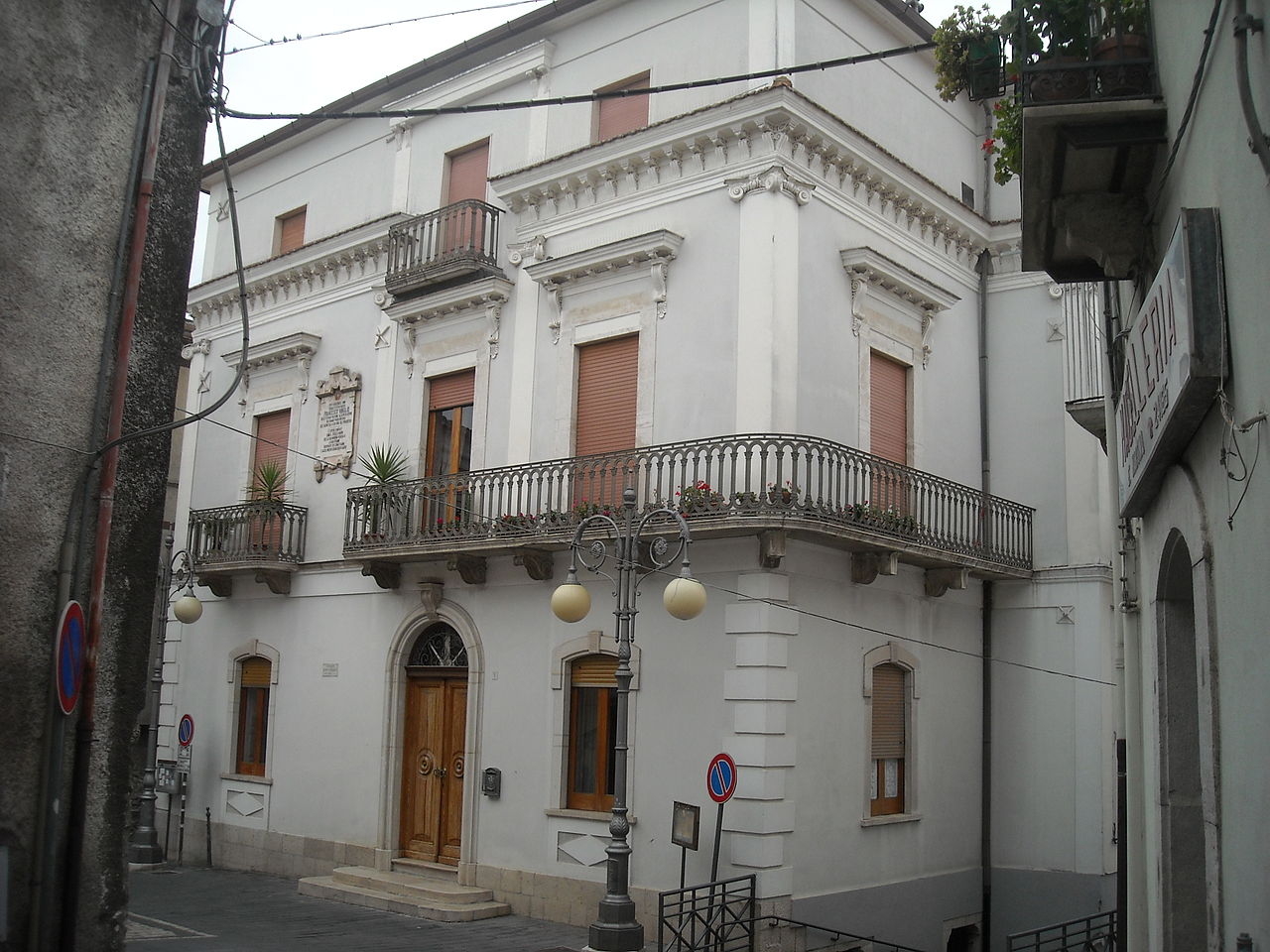
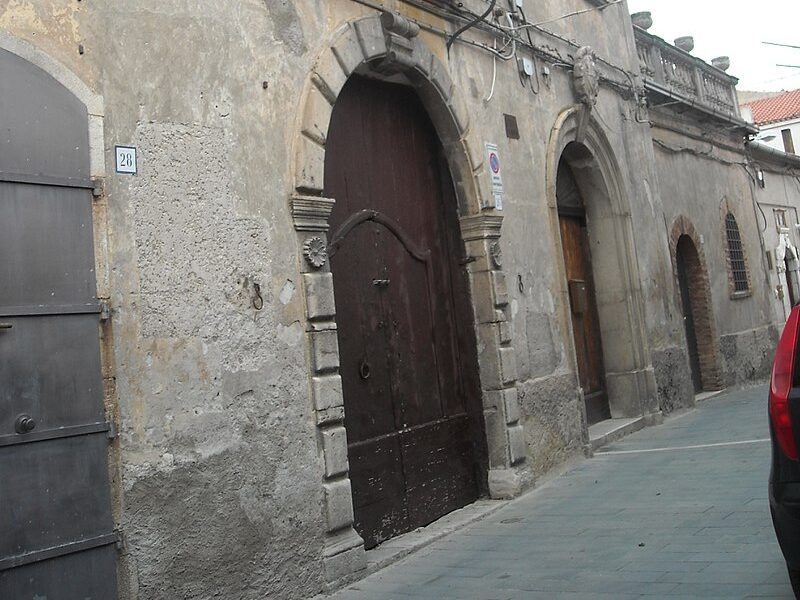
The town of Ripacandida stands on a cliff immersed in the hills of the Vulture-Melfese area, the large territory that extends south of the Ofanto river (which constitutes the northern natural border of Basilicata); it extends along the slopes of the volcanic massif of Monte Vulture and constitutes a vast sub-area of the Lucanian region, characterized by the cultivation and production of the "Aglianico grapes“, which give its name to the renowned wine “Aglianico del Vulture”.
The first known toponym is that of the inhabited center built in the 5th century on a previous pre-Roman site, Ripiam Candidam, but even more previously, Ripacandida was called only Candida or, Candida Latina (or Latinorum). Subsequently, in the Angevin period, the name was Castrum Ripe Candide , but in some ordinances of the Angevins, the center was cited as Castrum Ripǣ Candidǣ. In 1283 it seems that, under the rule of Lorenzo Lufolo, Ripacandida would have been called Ripǣcandidǣ or Ripǣ Candidǣ, without the prefix. The most accredited thesis sees the adjective "Candida" indicating the whitish color of the hill on which the town stands, while the less accredited one is that of the mythological founder Aurora Candida.
From an archaeological investigation of the years 1977-1980, the antiquity of Ripacandida dates back to the 7th century BC, but already at the end of the 19th century the Lucanian historian Michele Lacava discovered some caves from the archaeolithic era and mosaic floors at the slopes of Ripacandida. The ancient town of Ripacandida was connected to the most important site ofSerra di Vaglio (today in the territory of the municipality of Vaglio Basilicata) a few kilometers from Potenza.
Oral tradition states that the city was built by the Romans with the name “Candida Latinorum” (remains of a Roman aqueduct). According to some scholars, the name is given by the white color of the hill. The modern town dates back to the time of the Gothic invasions, when the inhabitants from the valley moved to the hill and built their homes around the temple dedicated to Jupiter (current castle - Chiesa Madre strong>). The Lombards fortified it with walls interspersed with towers. By undergoing various dominations we arrive at the first written sources of the 11th-12th century.
The papal bull of Eugene III (1152) decrees the construction of the churches of San Donato (the only one still existing), San Pietro, San Zaccaria, San Gregorio. He participates in the First Crusade. And it is registered in the catalogue of the Barons with its thirteen nobles, headed by the feudal lord Ruggero Marescalco, to participate in the Third Crusade, that of William the Good (1188-1198). Roberto di Ripacandida Federico II was tasked with guarding some Lombard prisoners, the area would later be called Massa Lombarda (today's Ginestra). Numerous feudal lords change, Caracciolo, Grimaldi (lords of Monaco), Boccapianola, Tironi, the last master is the Duke Mazzacara (1806).
A first colony of Albanian refugees in 1482 was hosted in a peripheral area called Cantone and subsequently transferred to Massa Lombarda. On 5 October 1571 he took part in the victorious battle of Lepanto with a large number of citizens including Gian Lorenzo Lioy, this was the period in which the fiefdom belonged to the Grimaldi Princes of Monaco, Marquises of the Country and Lords of Ripacandida from 1532 to 1641. Between the sixteenth and eighteenth centuries it was home to a theological study. In April 1861, he sided with the brigands led by Carmine Crocco, on that occasion there was the first victim: the captain of the national guard Michele Anastasia. He also had ferocious brigands Turtora, Di Biase, Larotonda. At the end of the 19th century, the phenomenon of emigration began: people abandoned the land in search of a more dignified future. In the USA, precisely in the State of Illinois, there is a town called Blue Island made up of immigrants from Recanati. In memory of their traditions, they celebrate San Donato bishop of Arezzo.
The Territory
Italian honey from Ripacandida